Young Violinists with Gábor Takács-Nagy – 1
Kóbor, Takács-Nagy
Program
Featuring
Other information
The event is about 105 minutes long.
About the event
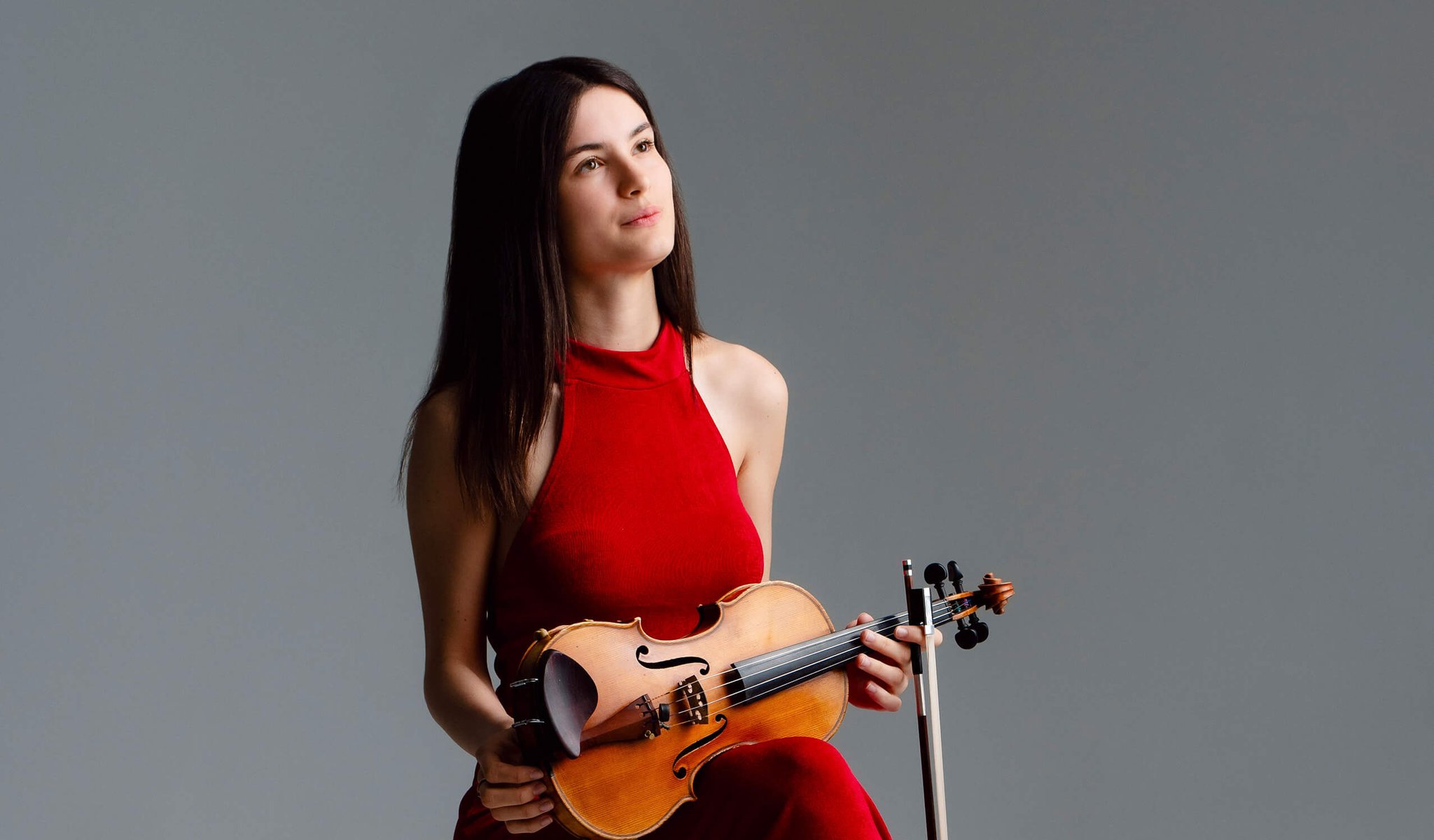
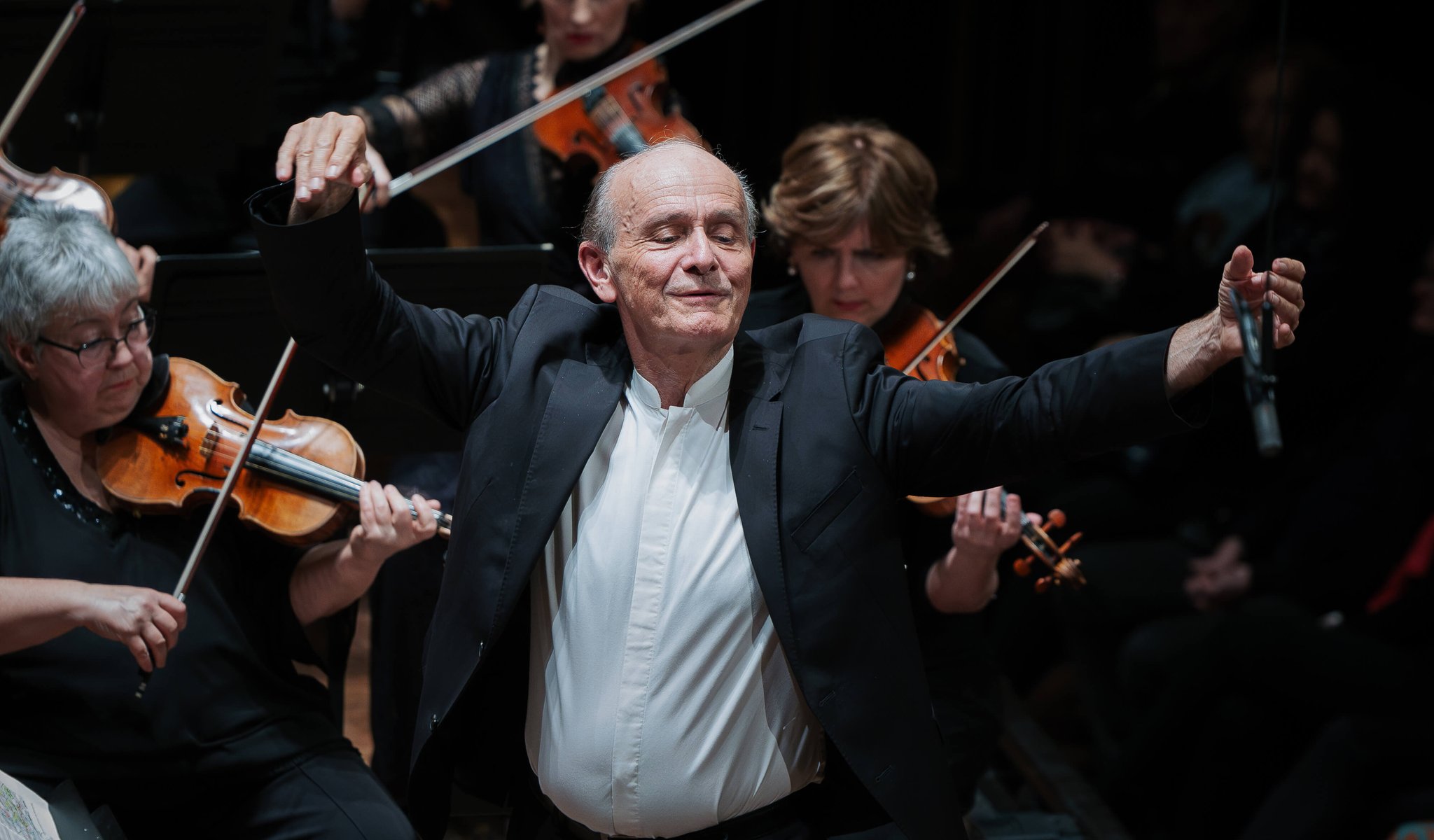
After his concerts featuring Haydn and Mozart in recent years, Kossuth-Prize-winning conductor Gábor Takács-Nagy is now presenting a truly romantic program. The concert begins with Schubert’s overture, which was saved by the composer himself from more than one failure on stage (The Magic Harp, Rosamunde) before it became a popular concert piece. This will be followed by Max Bruch’s Violin Concerto No. 1., which explores the depths of the instrument’s soul. Éva Kóbor, the soloist for this piece, has been working with the Budapest Festival Orchestra as a member of the European Orchestra Academy since 2024. Kóbor was invited to perform after winning the ensemble’s Sándor Végh Competition as a co-winner in January 2026. The concert will conclude with Schumann’s Symphony No. 2. This music of personal struggle is a reflection of Schumann’s recovery from physical and mental illness.
When composers feel that they have written music too good to go to waste due to circumstances beyond their control, they often try to rescue the composition for another work. This is exactly what happened to Schubert. It took him only two weeks to complete the incidental music for the melodrama The Magic Harp in 1820. After eight performances, however, it was completely removed from the theater’s program, and Schubert later recycled the overture in his incidental music for Rosamunde. This play turned out to be an even bigger flop, with only two performances. The overture, however, took on a life of its own and became a popular concert piece. The ominous C minor opening is soon replaced by the cheerful and brisk C major main section, the catchy melodies and clever orchestration of which inevitably leave audiences delighted.
Max Bruch’s violin concerto, which was composed between 1864 and 1867, is rarely heard in concert halls today. Although Bruch’s works used to be popular, only a few of them can be said to have withstood the test of time. However, this composition, which begins as a fantasy and therefore has a relatively free form, is an exceptional piece in its genre. A violinist himself, Bruch’s knew the instrument intimately, which is clearly reflected in the melodious, sometimes sensual, and sometimes rather virtuoso passages. The details were fine-tuned with the help of József Joachim, who premiered the concerto and to whom it was dedicated. After the upbeat opening, the slow movement, in which the violinist must make the instrument sing from its heart, arrives attacca. This is followed by the sparkling finale, which is a perfect example of how Bruch sought (and managed) to please his audiences.
Schumann’s Symphony No. 2 primarily evinces the influence of Bach. And no wonder, since Schumann, together with his wife Clara, did in-depth research into the Baroque master’s style, while from Beethoven he learned how to paint a musical path from grim darkness to heroic light. The chorale-like brassy tones of the opening movement, the B-A-C-H motif of the perpetuum mobile-style Scherzo, and the contrapuntal structure of the slow movement pay homage to Bach, while the Beethoven quote of the joyous finale is a tribute to the classical idol. When he began to compose the piece, which premiered with Mendelssohn as conductor, Schumann was at an all-time low from the perspective of his physical and mental health, and he was also plagued by mood swings, memory problems, and tinnitus. Still, upon hearing Schubert’s symphony in C major (known as “The Great”), he began composing, and by the time he reached the finale, he had discovered positive musical notes offering the hope of healing.
Did you know? Schubert’s overture premiered in Vienna on August 19, 1820, the revised version of Bruch’s violin concerto was first performed in Bremen on January 7, 1868 with soloist József Joachim and conductor Martin Rheinthaler, Schumann’s Symphony No. 2 premiered in Leipzig on November 5, 1846, conducted by Felix Mendelssohn; the BFO performed the overture most recently in Edinburgh on August 10, 2017 (conductor: Iván Fischer), the violin concerto in Los Angeles on July 30, 2019 (soloist: Nicola Benedetti, conductor: Iván Fischer) and Symphony No. 2 on January 20, 2020 (conductor: Marek Janowski).
Contemporary events: German composer Ludwig van Beethoven composed his 30th piano sonata (Op. 109) in 1820 / Ivanhoe, the historical novel of Scottish-English writer Sir Walter Scott was published in 1820 / In 1820, German philosopher Georg Wilhelm Friedrich Hegel put out his Elements of the Philosophy of Right / French painter Pierre-August Renoir completed Skaters in the Bois de Boulogne in 1868 / Austrian composer Anton Bruckner's Symphony No. 1 was premiered in Linz on May 9, 1868, under the composer's direction / The Galician Peasant Uprising and an uprising in Krakow against Austrian occupiers broke out in February 1846 / German composer Fanny Mendelssohn’s Gartenlieder (Garden Songs) cycle was published in 1846 / English poet and painter Edward Lee published his limericks in his Book of Nonsense in 1846
