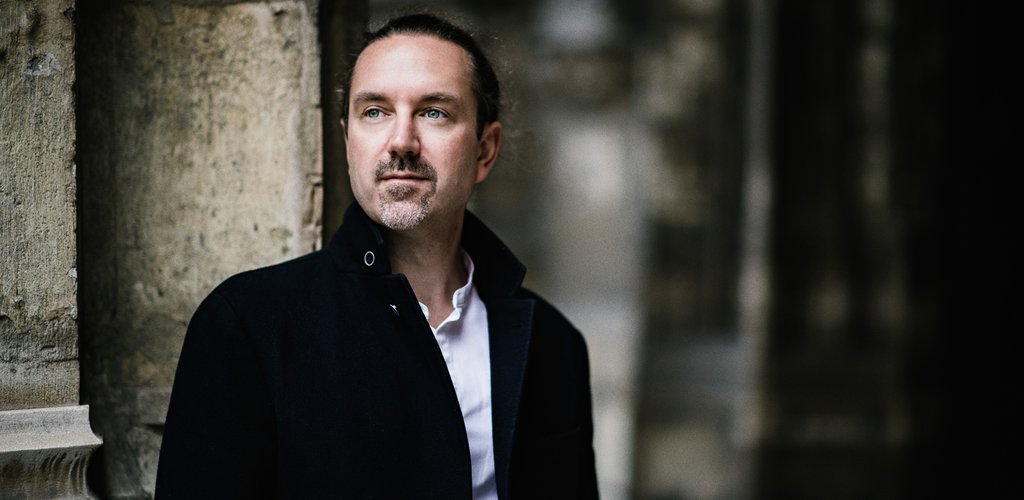
Julien Chauvin is a renowned French violinist and conductor, and one of the leading figures in historical performance practice. As a specialist in the Baroque and Classical periods, he often conducts with his violin in hand, using period instruments and leading with his bow. He is also the founder of the renowned Le Concert de la Loge orchestra. Júlia Váradi spoke with him before his concert in Budapest, where he will perform with the artists of the Budapest Festival Orchestra at the Liszt Academy on January 24 and 25.
It is so interesting to learn about a musician who does so many things at once. You are not only a violinist, but also a music director; you have your own orchestra and conduct as well.
Julien Chauvin: It's very simple, you know, music is everywhere. Music is hidden in the quartet because it is the purest, most direct form. Music "pops up" in concertos, symphonies, or operas, and when it does, we have to be able to catch it, wherever it goes. Of course, if we want to understand a composer, a style or an era, we need to be able to switch from a Mozart sonata to a quartet, a symphony or an opera. This allows us to understand music much better and more deeply. So we need to see and understand the whole world of music in order to know enough about it. But we can never know enough, there are still countless wonders and questions, but at least our knowledge grows when we do not limit ourselves to a single genre. I am convinced that knowledge of different genres is very important.
Meanwhile, as far as I know, your main goal is to gain the most thorough understanding of Baroque music and to share that understanding with others. But why Baroque? Why do you find that era so exciting? What does it offer you that other styles or eras don't?
J. Ch.: I think the 18th century must have been an extremely exciting period. It was a hundred years that shaped the centuries that followed. There was so much diversity. Within a single century, there were so many ideas, new types of composition, so many different performance styles and so many different venues. Not to mention the changes in instruments. That century was like a great revolution. We are talking about a hundred years, but in reality it was much more than that. I find this diversity extremely appealing: switching from a German composer to an Italian one, then to a French one. Although they lived at the same time, they spoke differently, sang differently, and played very differently. I find it extremely exciting and unstoppable to look for connections between them. The possibilities are endless. I believe that the spirit of that century was fresh and free. Not all the time, of course, but basically that was the case. We, as 21st-century musicians, must identify with this when we play Baroque music. We have to find our own way of performing these works – naturally using all our current knowledge, but also bringing our own individuality to bear.
It can't be easy to coordinate all that! What's more, it's well known that it's important for you not only to know how to play Baroque music, but also to be familiar with the instruments. Find out what they looked like, how they sounded, how musicians had to handle them. How do you know this for sure? Are there reliable documents or descriptions of this?
J. Ch.: There are mysteries, there are assumptions, and of course there are clues, or rather, certain references. There are paintings, and most reliably, there are original instruments that have survived and have never been modified. This is a great help. What is really difficult is that, since there are no recordings, of course, we cannot know exactly how they were used and how they sounded back then. But there are sources, studies, and other descriptions. We have to learn from these and prepare ourselves. We have to experiment with how these instruments sound. How to make replicas, how to make them sound good. We don't always succeed. But we have to find our own way to play this music, whether on copies or original instruments.
Do many people in your orchestra play original instruments?
J. Ch.: Yes, generally all our instruments, bows, and other accessories are original. The situation is more difficult with wind instruments, because flutes are very rare and extremely fragile. But yes, we have some fairly old instruments, ones that were actually made in the 18th century.
What can you tell us about that? What do you know about how musicians in the Baroque era conducted their music? How do you know how to conduct an 18th-century masterpiece?
J. Ch.: That is probably the most interesting question. Because although we have sources and references, there is a lot we don't know at all. What we do know for sure is that the figure of the conductor appeared in the mid-19th century. Before that, throughout the Baroque period, the concertmaster or harpsichordist, i.e. the keyboard player, led the concert. It is very interesting to see the development of conducting in Baroque music. With the emergence of the role of the conductor in the 20th century, power was placed in the hands of a single person, and the expressive power and decisive role of the other musicians was forgotten. The individuality of conductors became the most important aspect of musical performance, and from then on, every orchestra musician depended on a single person. In Baroque and classical music, the opposite was true..
Knowing this, how do you behave as a conductor when leading a Baroque chamber orchestra?
J. Ch.: I play, I play, and I conduct the concert while playing the violin. I have never conducted Baroque music with my hands or a baton, and I never will. That would be impossible. At most, I might give a signal with my violin bow once in a while, but I wouldn't call that conducting. I only conduct when there are choirs present. In such cases, it is important to have a baton for certain movements. But these are special concerts. We recently did a big production of Don Giovanni, which I conducted from the violin. Not only the musicians, but also the stage movements and everything else that happened on stage. So performing Baroque music also means giving power back to the musicians. I think that's a good and important thing.
At your concert in Budapest, you will be playing only pieces composed by members of the Bach family. What is important to know about the Bach brothers? To what extent can you sense in the Bach boys' music that they might have wanted to compete with their father? Is there any truth in this, or am I mistaken?
J. Ch.: You are not mistaken, that is a very interesting point. When it comes to musical dynasties and families of composers, conclusions are sometimes too simple, sometimes tricky, and sometimes dramatic. We have countless examples of families of musicians, instrumentalists, or composers. In Bach's case, of course, the master and father remained the same throughout the lives of the others. This is not always the case. Sometimes the father is overshadowed by his son or daughter. But in Bach's case, we can say that he is an origin, or even a god, something untouchable. We play two pieces by him, the Brandenburg Concerto No. 3 and the violin concerto transcription in G minor. These cannot be "touched." Of course, their father had a great influence on the boys, but many other things also determined their musical style and compositions. Although they lived in the same period, they developed in different parts of Germany and took different directions. For example, Carl Philipp, who sometimes behaved in the most unexpected ways (he was the craziest member of the family), was greatly influenced by the Sturm und Drang movement. This movement did not affect the older Bach. Thus, the musical works of the Bach family are easily distinguishable for posterity, as will be evident in this concert.
